Meisterschülerin SoSe 2026
Where Water Remembers
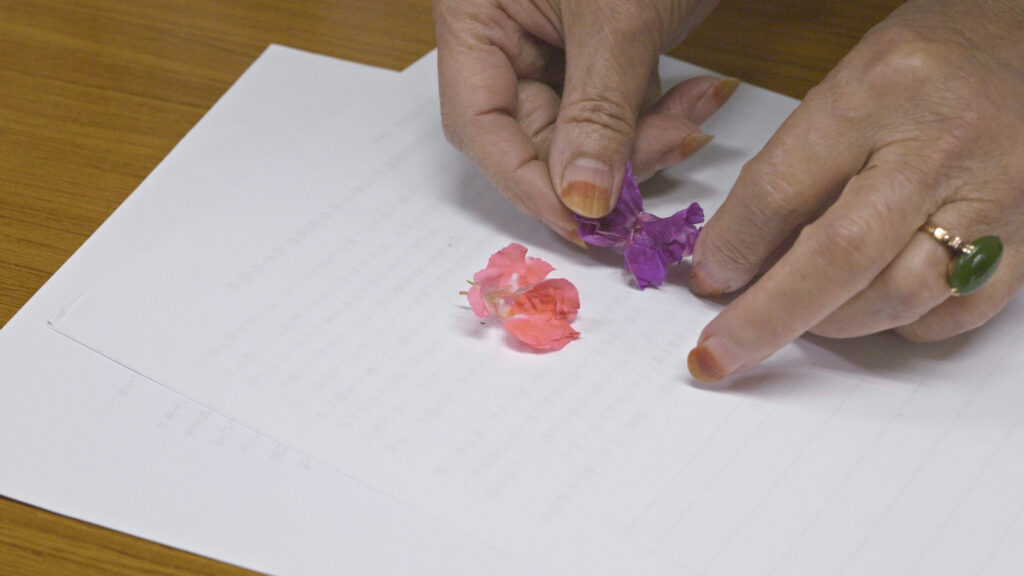
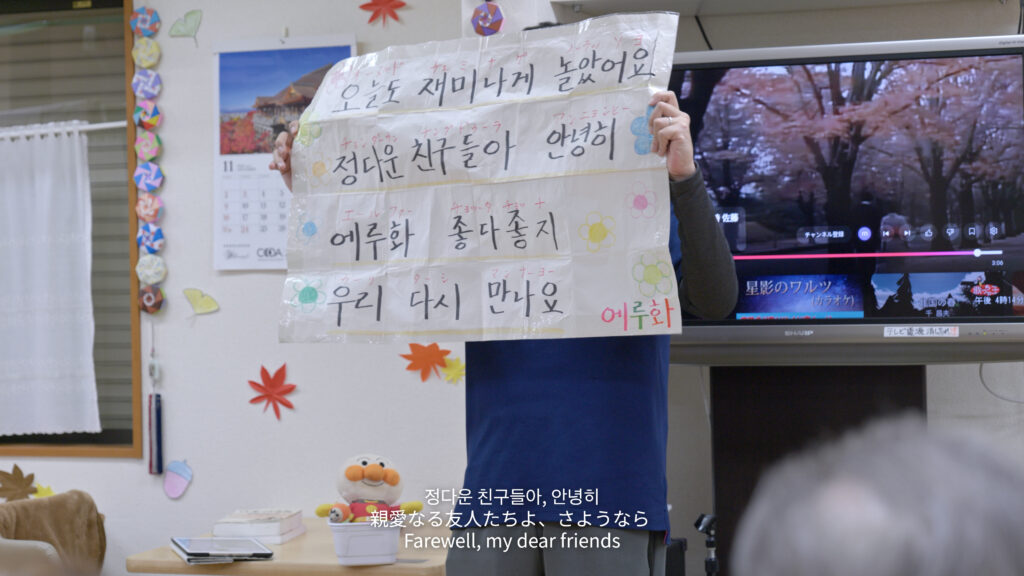
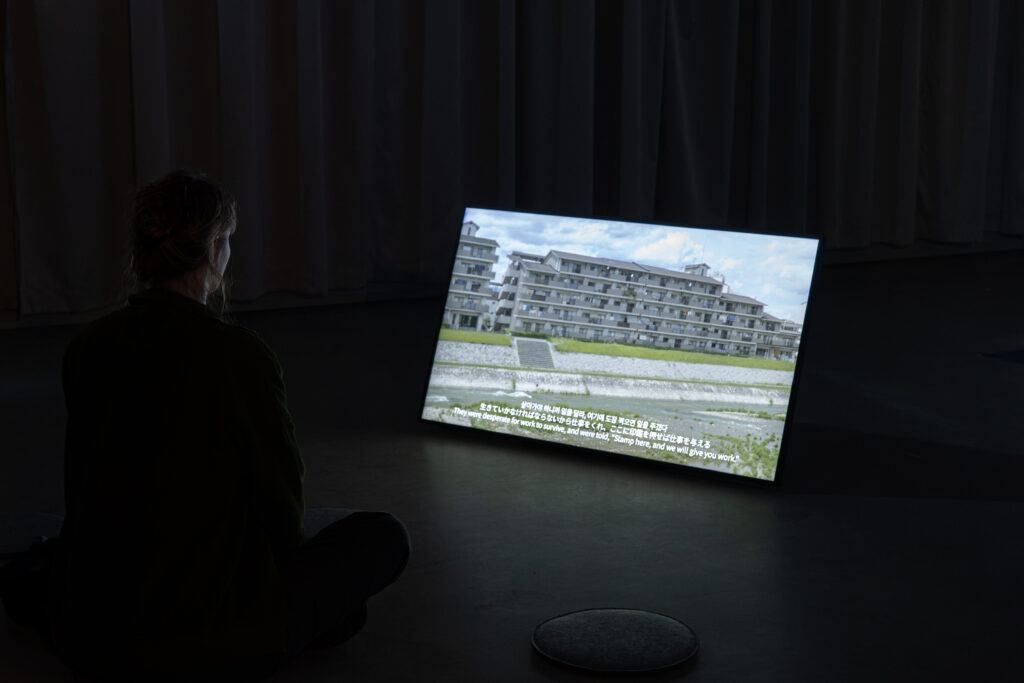
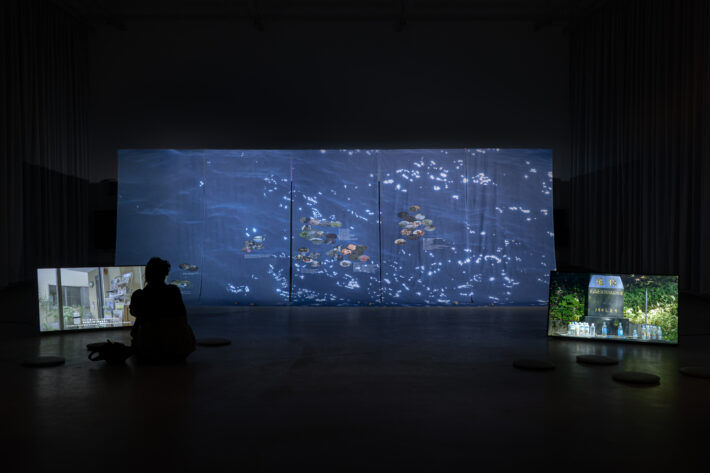
Where Water Remembers (2025–2026) Film stills, 4K UHD, colour, sound, 64’34’’
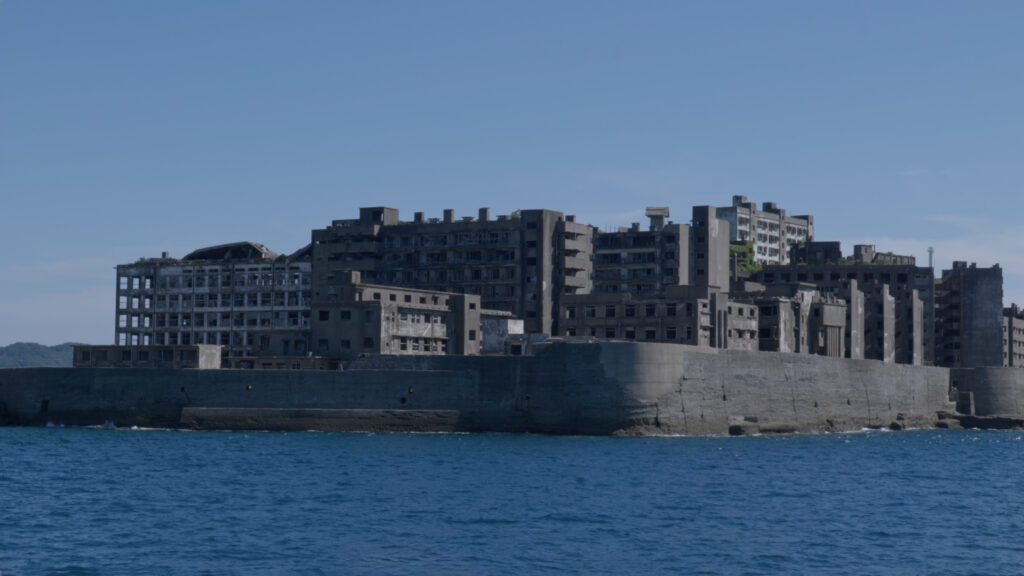
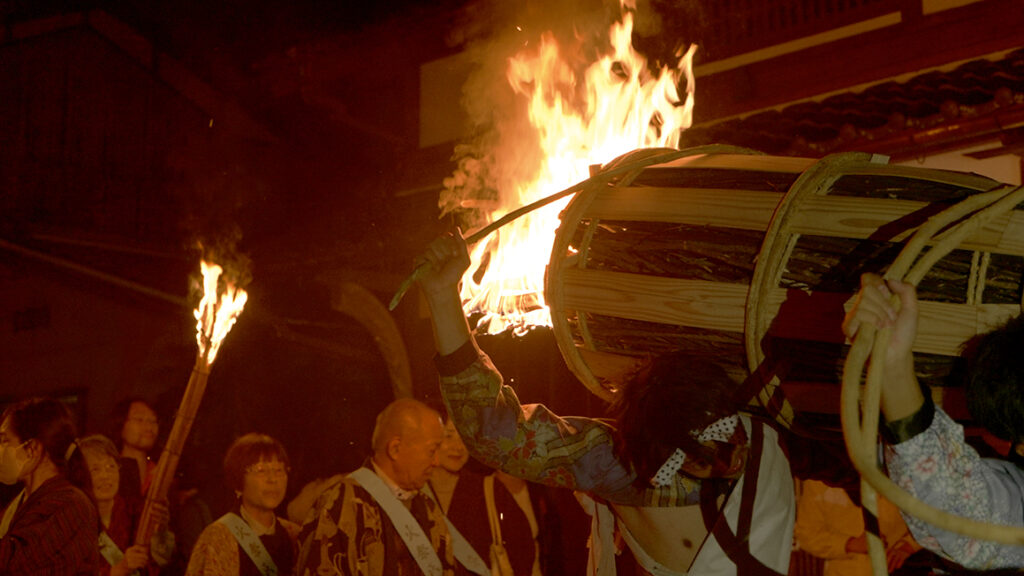
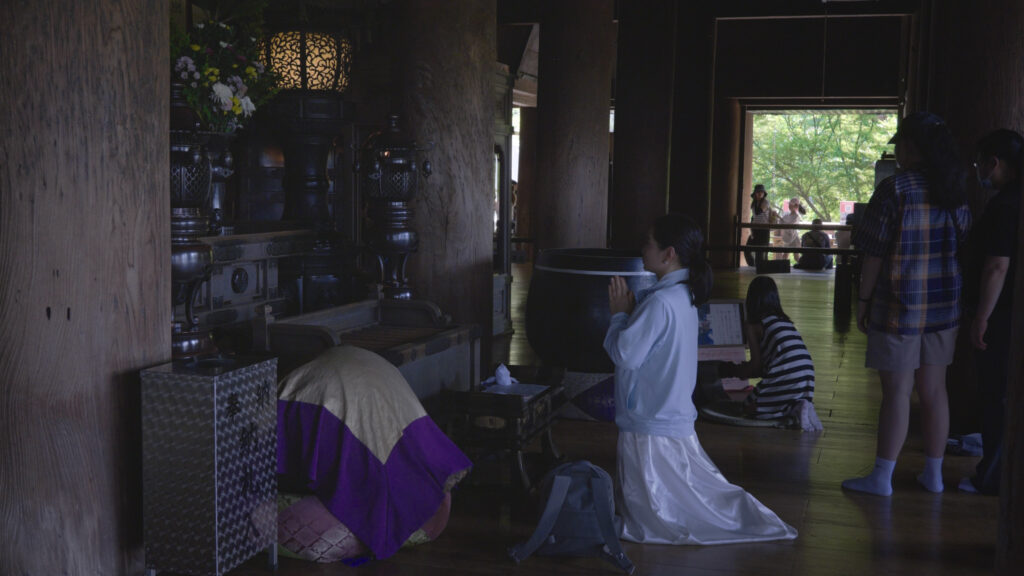
River Mourns, Island of Ashes (2025–2026) Film stills, 4K UHD, colour, sound, 43’36’’
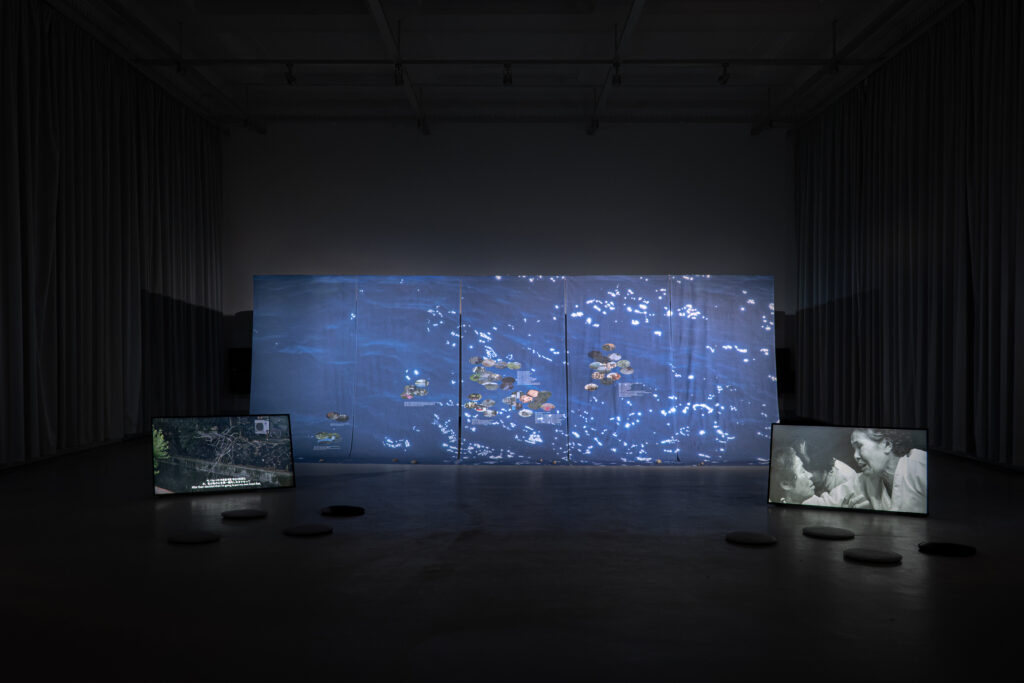
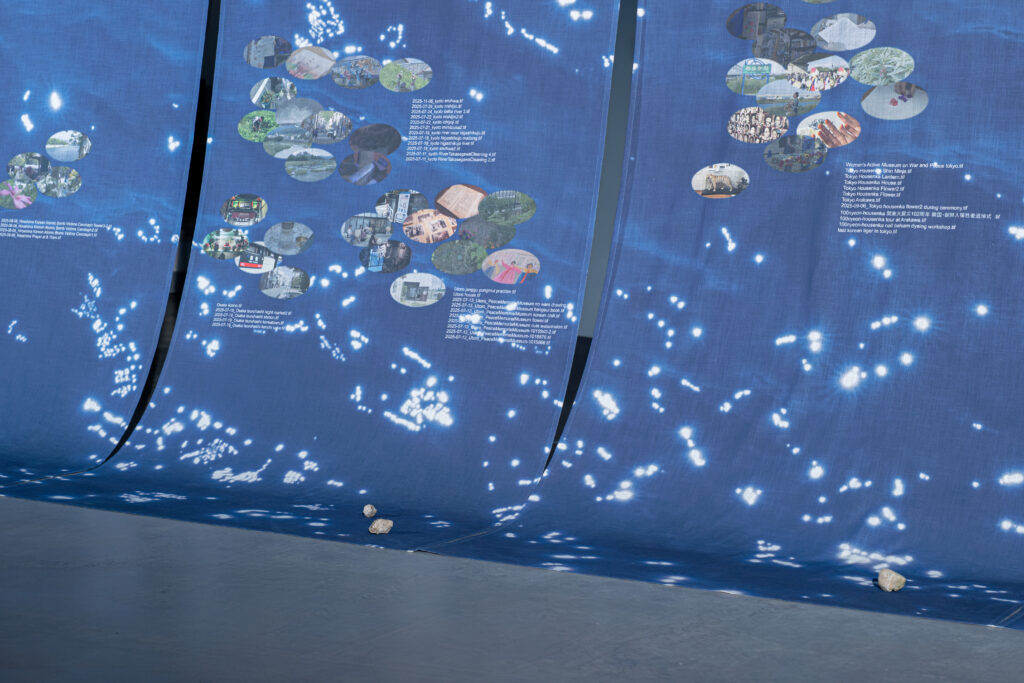
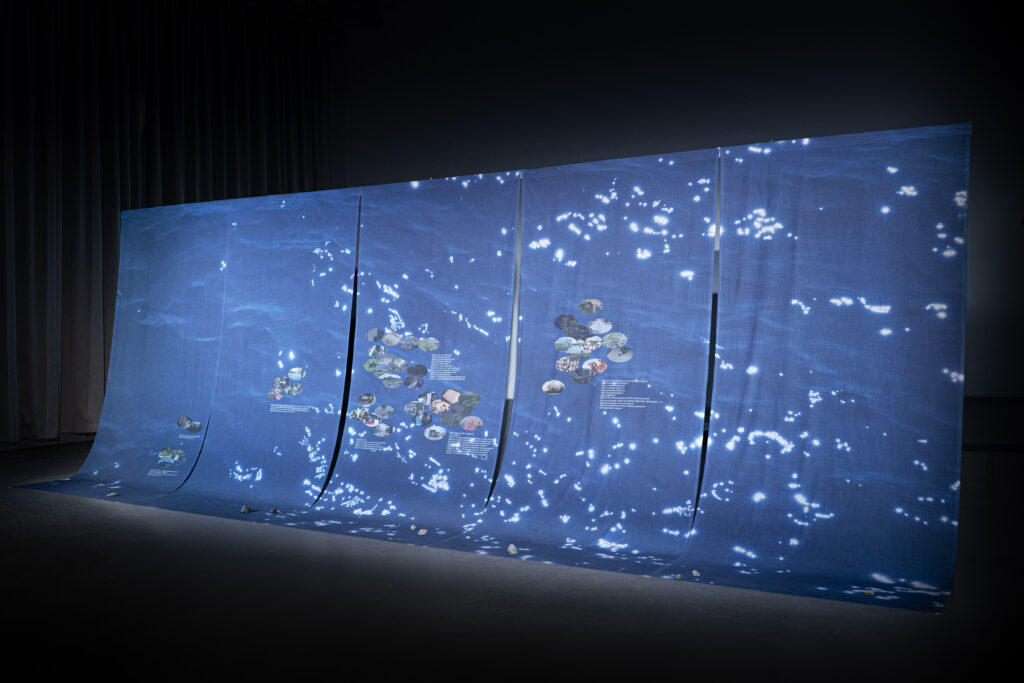
From the Sea to the River (2025) Research archives printed on linen, stones, 210 × 390 × 130 cm
Where Water Remembers is a research-based multimedia project that traces the continuities of imperial and colonial violence through the metaphor of water. It brings together two video works, Where Water Remembers and River Mourns, Island of Ashes, alongside the installation From the Sea to the River.Centring the narratives of Zainichi Korean communities and individuals who lived near these waters, the project approaches memories intertwined with landscape as embodied archives and forms of testimony.
Yun conducted research across eight cities in Japan and interviewed second- to fourth-generation descendants of people who were displaced or migrated under conditions shaped by Japanese imperial violence. The first video, Where Water Remembers, moves through relationships between community and individual lives, personal and intergenerational memories of migration, gendered labour, family, and practices of care. It considers how these histories are transmitted through stories as well as silence and absence, while approaching landscapes shaped by collective trauma as forms of testimony.
The second video, River Mourns, Island of Ashes, turns towards practices of mourning at sites marked by colonial, wartime, and state violence. Through memorials, testimonies, archival traces, and intimate gestures of care, the film traces how remembrance is carried into the present through mourning and resistance. It asks how a form of stateless solidarity might emerge across communities with disparate histories, without reducing their differences, and how such solidarity takes shape in the present.
The title Where Water Remembers reflects a geographic and political reality. Many Zainichi Korean communities developed in marginalised areas along riverbanks and canals, away from urban centres and near sites of forced labour such as mines, factories, airports, and harbours. Yet water operates beyond local geography, moving between sites and generations and carrying traces of migration, labour, loss, and survival. The project approaches water as a medium through which memory is carried, mourning is enacted, and geographically separated histories enter into relation.